If you’re about to register a new domain name for your web project, you’ll quickly realize that your domain’s initial sign-up price may be nowhere near the final domain name cost & expenses that you’ll need to shell out.
This is just how the domain registration market works, and understanding it is your key to not overpaying for optional upgrades that you probably don’t need.
Here’s how we’re going to break down the common domain name cost & expenses in this article:
Each section comes with an explanation of what a given domain name cost is all about, how to minimize it, and whether it’s something you actually need.
- Cost of Registering the Domain Name Itself
- Domain Renewal Costs
- Length of Initial Registration vs Price
- Premium and Aftermarket Domain Names
- ICANN Fee
- WHOIS Privacy
- Domain Lock
- Premium SSL Certificate
- Security Upgrades
- DNS Upgrades
- Upsells on Web Hosting, Email, and Other Software
- Domain Transfer Costs
- Tips for Choosing a Cost-Effective Domain Name
- Domain Name Cost FAQ
Let’s get the list started:
Cost of Registering the Domain Name Itself
There are countless companies that can register a domain name for you. Those companies are usually referred to as domain name registrars.
The main product that every registrar sells is the same – a domain name. A domain bought from one registrar is no different than the same domain bought from another registrar.
Despite that, even though they all sell the same thing, the prices between registrars can (and will) vary. This is why it’s important to do your research and not overpay when it comes to the main domain name cost.
Apart from the price differences between registrars, different domain extensions come with different price tags too – even from the same registrar. For example, a .store domain (popular for online stores) is going to be more expensive than the traditional TLDs such as .com or .org. Newer extensions like .ai – which has surged in popularity alongside the growth of artificial intelligence – can be even pricier, often starting at $70-$100 per year.
On top of that, you’ll also find that each domain extension has a different price tag with each registrar, which adds a whole new level of complexity to this pricing puzzle.
Generally speaking, most standard domain names cost between **$10 and $20 per year** to register. However, prices can vary widely depending on the extension and registrar.
To make this more approachable, we’ve done the research for you. Here’s a comparison of the registration prices for the most popular domain extensions with the most popular registrars:
| Domain | GoDaddy | Hover | Domain.com | Namecheap | Squarespace Domains |
|---|---|---|---|---|---|
.com |
$12.19 | $19.19 | $9.99 | $11.48 | $20.00 |
.net |
$15.19 | $20.19 | $14.99 | $13.18 | $20.00 |
.org |
$10.19 | $10.19 | $12.99 | $7.68 | $20.00 |
.co |
$17.99 | $37.99 | $29.99 | $6.98 | $20.00 |
.online |
$5.99 | $3.19* | $4.99 | $0.98* | $20.00 |
.store |
$5.99 | $3.19* | $4.99 | $0.98* | $20.00 |
.shop |
$5.99 | $40.00 | $4.99 | $3.98 | $20.00 |
* First-year promotional price only. Standard renewal rates apply from year two onward and are considerably higher. Verify renewal costs at checkout before purchasing.

Domain Renewal Costs
This is often a surprise to many first-time domain name buyers – the initial price of a domain name is nearly never the price at which the domain is going to renew every year.
The differences between the initial prices and renewal haven’t been too huge with traditional domain name extensions, such as .com or .net. The average cost is usually $2-$5 more on top of your original price to renew them.
However, for more premium domain extensions like .store, .design, .doctor and so on, the renewal prices can increase a lot. You need to be careful with those extensions because you can often find them at a bargain of $2 for the first year, but then the price can increase even 10 or 20 times. For example, buying the .store domain from Hover might be just a few dollars for the first year, but then the price can rise to $50-$80 every year after that.
Before making a purchase, always check what the domain name cost is going to be to renew the domain once the initial registration period is up. Most registrars display the renewal price somewhere on the product page – look for it before you check out.
Again, here’s a quick comparison table of a handful of popular domain name extensions from a couple of registrars and their initial vs renewal prices:
| Domain | GoDaddy | Hover | Domain.com | Namecheap | Squarespace Domains |
|---|---|---|---|---|---|
.com |
$12.19 | $19.19 | $9.99 | $11.48 | $20.00 |
.com renewal |
$22.19 | $19.19 | $14.99 | $18.68 | $20.00 |
.net |
$15.19 | $20.19 | $14.99 | $13.18 | $20.00 |
.net renewal |
$25.19 | $20.19 | $19.99 | $18.78 | $20.00 |
.org |
$10.19 | $10.19 | $12.99 | $7.68 | $20.00 |
.org renewal |
$23.19 | $16.19 | $17.99 | $16.18 | $20.00 |
.co |
$17.99 | $37.99 | $29.99 | $6.98 | $30.00 |
.co renewal |
$51.99 | $37.99 | $34.99 | $39.98 | $30.00 |
.store |
$5.99 | $3.19 | $4.99 | $0.98 | $35.00 |
.store renewal |
$29.99 | $67.19 | $29.99 | $37.98 | $35.00 |
Length of Initial Registration vs Price
The last factor that can play a role in the initial cost of your domain name registration is how long you want to register the domain.
With some providers, the longer your initial registration period, the cheaper the domain name is going to be per year. However, you will have to pay for the entire period upfront, so it’s a higher investment walking in.
Here’s an example comparison of yearly prices for .com, .net, and .org domain name extensions by provider:
| Domain | GoDaddy | Hover | Domain.com | Namecheap | Squarespace Domains |
|---|---|---|---|---|---|
.com 5-year cost
with 1 year upfront |
$100.95 | $96.95 | $69.95 | $86.20 | $100.00 |
.com 5-year cost
with 2 years upfront |
$100.95 | $96.95 | $69.95 | $86.20 | $100.00 |
.com 5-year cost
with 5 years upfront |
$100.95 | $96.95 | $69.95 | $86.20 | $100.00 |
.net 5-year cost
with 1 year upfront |
$115.95 | $101.95 | $94.95 | $88.10 | $100.00 |
.net 5-year cost
with 2 years upfront |
$115.95 | $101.95 | $94.95 | $88.10 | $100.00 |
.net 5-year cost
with 5 years upfront |
$115.95 | $101.95 | $94.95 | $88.10 | $100.00 |
.org 5-year cost
with 1 year upfront |
$102.95 | $74.95 | $84.95 | $72.40 | $100.00 |
.org 5-year cost
with 2 years upfront |
$102.95 | $74.95 | $84.95 | $72.40 | $100.00 |
.org 5-year cost
with 5 years upfront |
$102.95 | $74.95 | $84.95 | $72.40 | $100.00 |
Premium and Aftermarket Domain Names
The prices we’ve discussed so far apply to standard, unregistered domain names. But there’s a whole other category of domains that can cost significantly more: **premium** and **aftermarket** domains.
**Premium domains** are short, memorable, keyword-rich names – think something like shoes.com or travel.net. These names are considered highly desirable because they’re easy to remember and can carry built-in SEO value. Premium domains are typically priced by the registry (the organization that manages the extension) and can cost anywhere from a few hundred dollars to tens of thousands – or even more.
**Aftermarket domains** are names that were previously registered by someone else and are now being resold. You’ll find these listed on auction sites and domain marketplaces. Prices vary wildly depending on the domain’s length, keywords, existing traffic, backlink profile, and demand. It’s not unusual to see aftermarket domains listed for $1,000-$30,000 or more.
If a domain you want is already taken, you have a few options:
- Check domain auction platforms to see if it’s listed for sale.
- Use the WHOIS lookup to find the current owner’s contact information and reach out directly.
- Use a domain broker service (offered by companies like GoDaddy) to negotiate on your behalf.
- Wait for the domain to expire – though there’s no guarantee it will become available.
For most beginners, a standard domain registration is all you need. Premium and aftermarket domains are worth exploring only if you have a specific, high-value name in mind and the budget to match.
ICANN Fee
ICANN, which stands for Internet Corporation for Assigned Names and Numbers, is the main body regulating the domain name market as a whole.
Long story short, for any domain name to exist, ICANN has to know all about it. Apart from that, they don’t play any other role from a domain user’s (website owner’s) point of view.
What’s important for you is this:
For each year that your domain exists, ICANN will charge an annual fee of $0.20.
Depending on the domain name registrar you’ve chosen, you might be charged this fee directly, or it might already be included in the price of the domain.
The annual fee charged by ICANN is mandatory.
WHOIS Privacy
Whenever registering a domain name, you have to provide your personal information to be associated with the domain name and stored in the domain’s records. Basically, ICANN needs to know who owns the domain name.
By default, this record is publicly available and can be looked up by what are commonly called “whois” tools. There’s a load of those; all you have to do is google the term “whois” to find them. Here’s an example of what a tool like that returns when asked to look up microsoft.com:
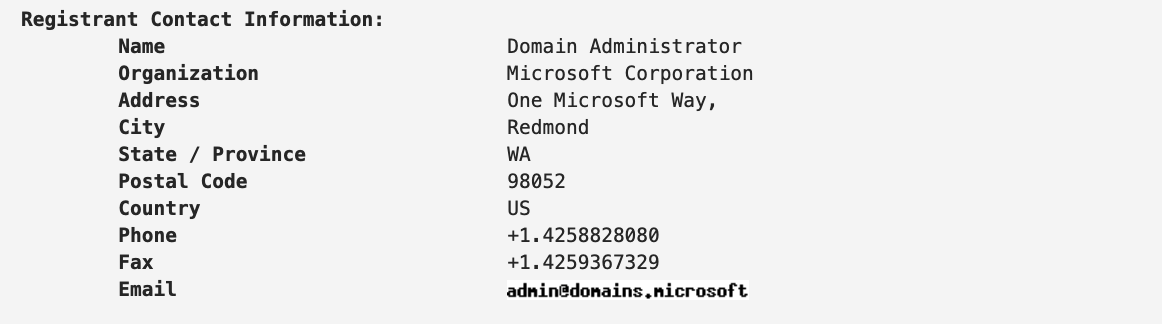
What you can see here is the actual address and phone number of the Microsoft headquarters. Of course, in the case of a big corporation like Microsoft, having contact data like this available is no problem. However, if you’re registering a domain under your own name – using your personal address and phone number – then you might not want to have these things out in public.
This is where WHOIS privacy comes into play.
Domain registrars will allow you to make your personal info invisible in whois lookups. If you do enable this, a common whois result will look like the following (looking up our own websitesetup.org):
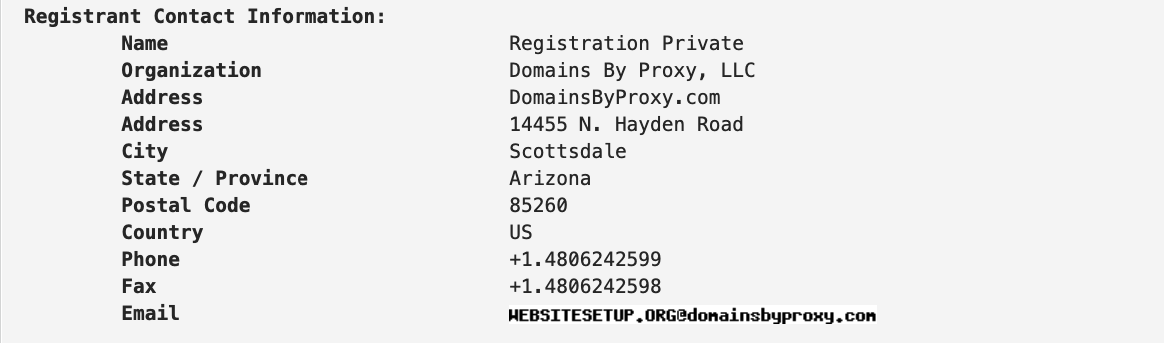
The info you see here isn’t our own company info but instead info of the body registering the domain name.
WHOIS privacy comes at different prices from different registrars. The good news is that many registrars now include it for free. For those that don’t, you can expect to pay up to around $10 a year.
Here are the prices from a handful of popular registrars:
- GoDaddy – free (basic privacy included with all eligible domains)
- Domain.com – ~$8.99/year (needs direct verification)
- Namecheap – free
- Hover – free
- Squarespace Domains – free
Even though this upgrade is fully optional, it’s a true must-have. You don’t want your personal info out there.
Domain Lock
Although it remains somewhat under the radar, domain theft is a serious issue, particularly for websites that have begun to gain traction or own domains that contain valuable keywords.
The domain lock upgrade can protect your domain from being stolen. You get an additional layer of security on top of your standard authentication with the domain registrar.
Basically, domain lock prevents unauthorized attempts to delete your domain, transfer it to another registrar, or to change the contact details on record.
The most popular and biggest registrars offer this feature for free, and most of the time it’s even enabled by default (Squarespace Domains, Namecheap, GoDaddy, Hover). However, it’s still worth checking how your registrar handles domain locking. You can find this info on every registrar’s website.
Domain lock is a must-have if you have a valuable domain name or your website generates revenue.
Premium SSL Certificate
An SSL (Secure Sockets Layer) certificate is a web authentication method that ensures communication security between the parties. Or, to say this in another way, an SSL certificate makes sure that every piece of data that’s sent back and forth between a website and its visitor is encrypted.
This is particularly important when dealing with online banking websites or eCommerce stores (where people often share their credit card numbers).
Long story short, if you want to build a website with the new domain name that you’re registering, then you’ll need to get an SSL certificate installed as well.
However, this is where it can get complicated.
Most of the time, buying a premium SSL certificate from a domain registrar isn’t necessary. You can get an SSL later on from your web host – the company that will store your website. In fact, in 2026, the vast majority of web hosts include a free SSL certificate (typically via Let’s Encrypt) as a standard part of their hosting plans. This means you almost certainly won’t need to pay extra for one.
Premium SSL certificates are generally only worth considering if you’re running a large eCommerce operation or need extended validation (EV) certificates that display your organization’s name in the browser bar.
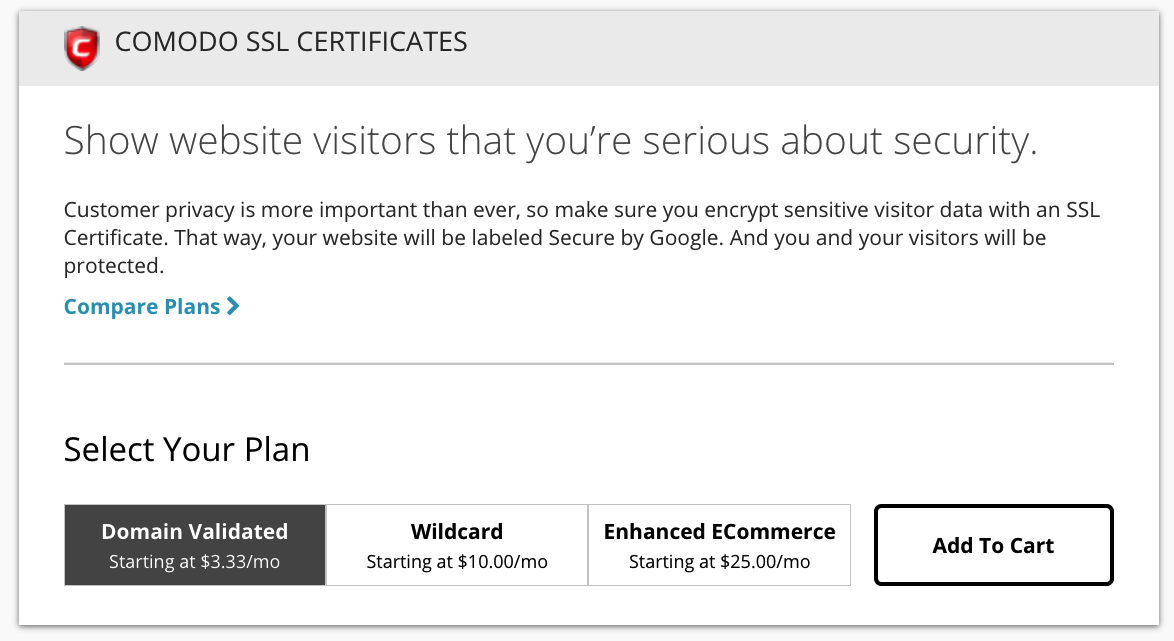
Premium SSL certificates offered by registrars can add to your domain name cost anything from $10 a year to $25 a month. But for most beginners, a free SSL from your web host will do the job perfectly.
Security Upgrades
Domain locking and SSL certificates are not everything you can do to protect your domain name from wrongdoing. Depending on your registrar, you might have other options available, too. For instance:
- Protection against domain expiration due to billing issues.
- Automatic malware and virus scans, security monitoring, notifications, and alerts on certain security-related events.
- Search engine monitoring to see if your domain is on a blacklist.
- Blocking bot attacks and DDoS attacks.
- Web Application Firewalls, and more.
Some registrars offer these services by their own means and some partner with third-party companies like SiteLock – for example, Bluehost and Domain.com both offer SiteLock as an add-on security service.
Most upgrades are also sold in bundles, so you can pick which specific things you need and select your tier accordingly.
The prices range from $14.99 a month (billed annually) to $44.99 a month for the highest Business tier.
Our advice is to think about these upgrades when you have your website running. There’s no reason to get them at the stage of domain name registration.
DNS Upgrades
DNS servers are responsible for guiding visitors to your website by translating your domain name into a numeric web address (called an IP address), which computers can actually understand.
Some domain registrars will try to upsell you on a premium DNS service. While there are some benefits to it, like improved response time and faster IP address resolution, those differences are not that noticeable to the end user.
Oftentimes, as part of the premium DNS package, you’ll get something called DNSSEC (Domain Name System Security Extensions). As the definition says, “DNSSEC strengthens authentication in DNS using digital signatures based on public-key cryptography”. In plain English, it makes your domain more secure by making it harder for attackers to step in the middle and impersonate you.
On its own, these DNS upgrades are not worth the hassle. The benefits are minimal – unless you’re going to be running a big website with lots of traffic.
The only problem here is that some domain registrars will force the DNS upgrade onto you, and you won’t have a choice to skip it. Unfortunately, this is something you’ll find out in the shopping cart, just before going through the checkout.
This sort of DNS upgrade can cost between $0–$7.
Upsells on Web Hosting, Email, and Other Software
The last group deals with upsells – these often come after the domain registration. Most people need domains for either of two things: (1) they want to create a custom email address, or (2) they want to build a website. Or both.
Domain name registrars know this, so they will try to help you out and sell you their own services that cover these needs.
Most commonly, you can expect upsells like:
- Email hosting. This gives you server space to handle your email inboxes and allows you to create a custom email under your own domain; like
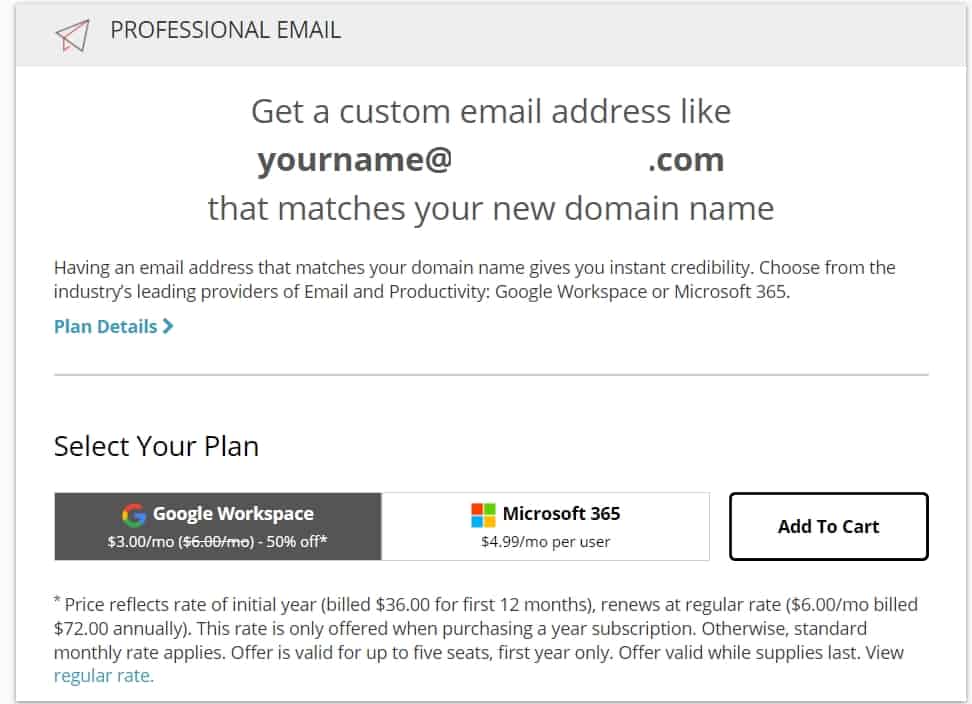
john@yoursite.com. This can cost from $1 per inbox a month, all the way to $10 per inbox a month. - Google Workspace integration. This is also about email hosting, but this time, your emails will be hosted on Google’s servers. Starts from $7 per user a month. As an alternative to Google, you can also find offers for Microsoft 365, a similar service.
- Web hosting. Server space for your future website. Starts from $1 a month for basic server space for one site and goes up to hundreds of dollars. On the bright side, many web hosting providers offer free domains for the first year when you sign up for an annual plan.
- Website builders. These tools make it easy to build a website on your own by using a simple visual interface – no coding required. Your experience with them can vary, so it’s probably not worth buying a builder bundled with your domain.
Whether you should opt for any of these hosting upgrades is up to you.
Getting your domain name and email hosting from the same company will simplify the setup, especially if you’re a beginner to these things.
For example, adding an email inbox to a Namecheap domain costs around $15 a year, which is quite a bargain.
Domain Transfer Costs
One domain-related expense that catches people off guard is the cost of **transferring a domain** from one registrar to another. You might want to do this if you find better pricing elsewhere, if you want to consolidate your domains under one provider, or if you want to manage your domain and website hosting in the same place.
Most registrars charge a transfer fee, which often equals the cost of renewing the domain for one additional year. So if your .com renewal costs $15/year, expect to pay around $15 to transfer it – and that payment typically extends your registration by one year.
Some things to keep in mind about domain transfers:
- Domains usually can’t be transferred within 60 days of initial registration (this is an ICANN rule).
- You’ll need to unlock your domain and obtain an authorization code (also called an EPP code) from your current registrar.
- Some registrars charge no transfer fee beyond the renewal cost, while others may add a flat fee on top.
If you’re happy with your current registrar, there’s no reason to transfer. But if you do need to move your domain, budget for a renewal-priced fee and plan ahead.
Tips for Choosing a Cost-Effective Domain Name
The domain name you choose affects not just your brand, but also how much you’ll pay – both upfront and long-term. Here are a few practical tips to keep costs under control:
- Stick with common extensions. A
.com,.net, or.orgdomain will almost always be cheaper to register and renew than niche TLDs like.store,.ai, or.design. - Keep it short and simple. Shorter domain names are easier to remember, easier to type, and less likely to be misspelled. They also tend to hold their value better if you ever decide to sell.
- Avoid hyphens, numbers, and unusual spellings. These make your domain harder to share verbally and increase the chance of visitors ending up at the wrong site.
- Check the renewal price before buying. As we covered earlier, some domains lure you in with a $2 first-year price and then jump to $50+ on renewal. Always check both prices.
- Consider bundling with hosting. If you’re planning to build a website, many web hosts and website builders include a free domain for the first year with their annual plans. This can save you $10-$20 right away.
- Register for multiple years if you’re committed. Some registrars offer a lower per-year rate when you register for two or more years upfront. If you know you’ll be keeping the domain, this can save you money over time.
Where to Get Your Domain Name
As you can see, there are quite a few domain name costs and expenses lurking in the dark, and the initial cheapest price can turn out to be many times higher during or after the purchase. The good news is that most of the extras are not mandatory, plus you can choose to get them later on as well.
If you’re looking for a good company to register your domain with, here are our favorites:
Domain Name Cost FAQ
How much does a domain name cost per year?
Most standard domain names cost between $10 and $20 per year to register. The exact price depends on the domain extension (e.g., .com vs. .store) and which registrar you use. Renewal prices are typically a few dollars higher than the initial registration price.
Can I buy a domain name permanently?
No. Domain names can’t be purchased permanently. Under ICANN rules, you can register a domain for a maximum of ten years at a time. After that, you’ll need to renew it. However, you can set up auto-renewal with your registrar so you never accidentally lose your domain.
Why do some domain names cost thousands of dollars?
Those are premium or aftermarket domains – names that are short, memorable, keyword-rich, or already have an established web presence. They’re priced based on market demand, just like real estate. Standard, unregistered domain names are far more affordable.
Are there hidden fees when buying a domain?
There can be. Common extras include WHOIS privacy protection, SSL certificates, email hosting, and higher renewal prices after the first year. We’ve broken down each of these costs in this article so you know exactly what to expect and what you can skip.
Can I get a domain name for free?
Yes — many web hosting providers and website builders include a free domain name for the first year when you sign up for an annual plan. After the first year, you’ll need to pay the standard renewal price. You can also find free subdomains (like yoursite.wordpress.com), but these aren’t ideal for a professional web presence.
Is it cheaper to register a domain for multiple years?
With some registrars, yes. Namecheap, for example, tends to offer lower per-year pricing when you register for two or more years upfront. Other registrars keep the price the same regardless of the registration length. Check the multi-year pricing before you commit.